
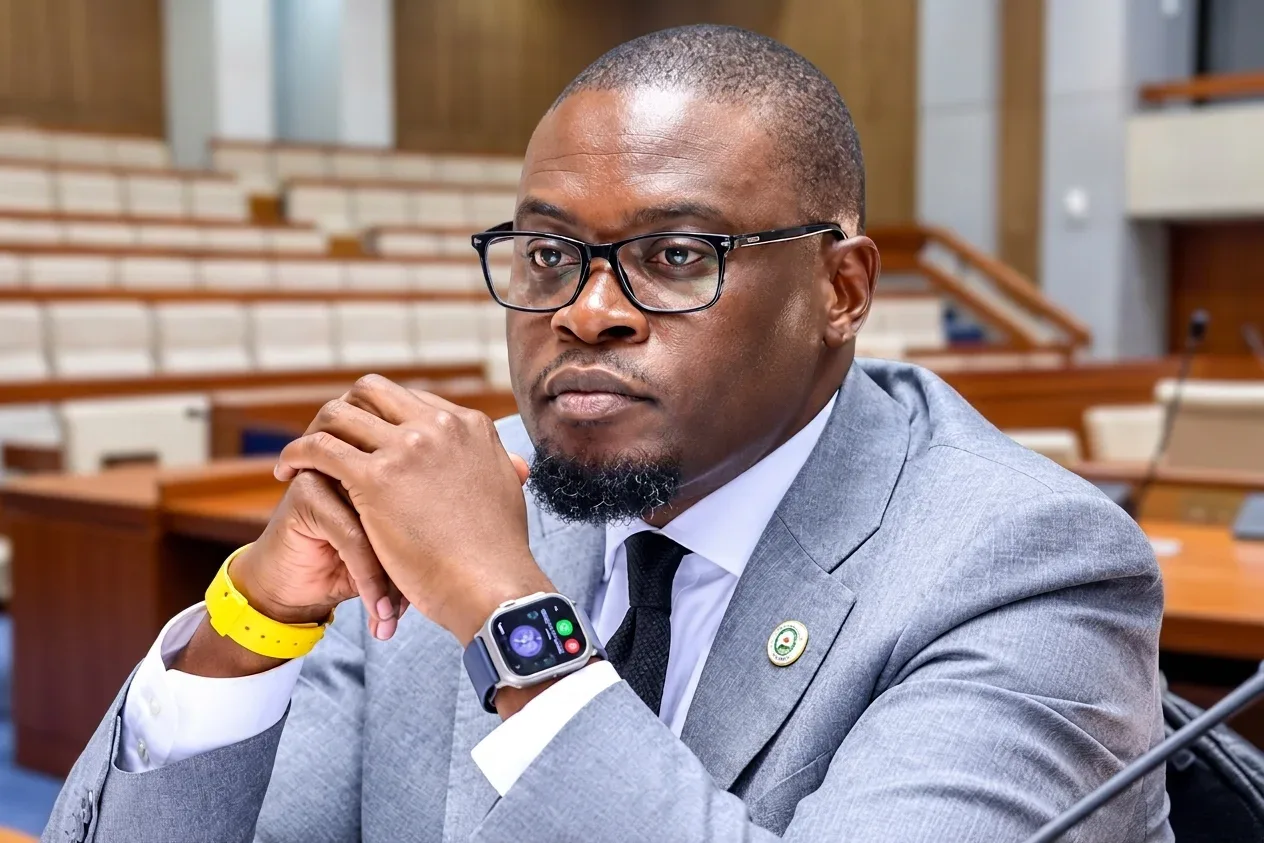
Nairobi Governor Johnson Sakaja is facing an increasingly uncertain political future as the 2027 General Election approaches, with recent developments pointing to a reconfiguration of the Broad-Based Government’s political machinery in the capital – a machinery that excludes Sakaja.
Just days after defecting from the ruling United Democratic Alliance (UDA) to the Orange Democratic Movement (ODM), Sakaja found himself at the centre of an uncomfortable political moment during a meeting hosted by President William Ruto at State House, Nairobi, on Friday, November 13.
The meeting brought together 1,500 grassroots delegates from ODM and UDA, alongside political leaders allied to the Broad-Based Government (BBG), to deliberate on development priorities in the capital and the country’s broader political landscape.
However, the events of the meeting appeared to raise questions about the governor’s place in the emerging political arrangement, particularly as the two parties begin positioning themselves ahead of the 2027 elections.
According to sources familiar with the meeting, Sakaja was neither involved in mobilising the delegates nor formally invited to attend. The responsibility for organising the respective party delegations was reportedly assigned to Kasarani MP Ronald Karauri for UDA and his Makadara counterpart, George Aladwa, for ODM.
The governor nevertheless attended the meeting, apparently recognising the political significance of a gathering that brought together influential figures from his former party and his new political home and being held in the county he governs.
But his presence did little to dispel questions about his standing within the emerging arrangement.
Those present noted that Sakaja was not given an opportunity to address the delegates, while the President and other principal speakers made little reference to his presence, much less his role in the capital’s political leadership.
The most consequential moment came when President Ruto announced that the Nairobi political operations of the two parties would be coordinated by Karauri and Aladwa, effectively placing the two legislators at the centre of the President’s emerging grassroots mobilisation structure in the city.
“As for the UDA team, you will be coordinated by Karauri while Aladwa will be in charge of the ODM team. If you need anything, pass through these two,” the President told the delegates.
The statement appeared to signal the establishment of a parallel political coordination structure in Nairobi, one that did not place the sitting governor at its centre.
In another pointed remark, when Ruto mentioned Sakaja, it was to tell the ODM delegates that he had effectively “donated” the governor to their party. The comment reportedly drew a mixed reaction from the gathering, with boos and loud cheers heard in response.
The exchange was particularly significant given that Sakaja had formally joined ODM only a week earlier, seemingly expecting the move to strengthen his political position within the Broad-Based Government ahead of his bid for a second term.
The governor’s difficulties were compounded by the absence of any visible effort by senior ODM officials to position him as a central figure in the party’s Nairobi strategy. Among those present was ODM chairperson and Homa Bay Governor Gladys Wanga. National Assembly Minority Whip Junet Mohamed, who had been among the party officials involved in receiving Sakaja at Orange House, was also in attendance.
An ODM member allied to the governor described the atmosphere as uncomfortable, suggesting that the meeting had exposed the uncertainty surrounding Sakaja’s political future.
“The governor was humiliated, to say the least. Boss ako na stress mbaya. Ako down vibaya. He has not spoken to us since then. It’s clear he is unwanted, and even our party chiefs could not pitch for him,” the member told Inflection on Monday.
The significance of the meeting extended beyond the party coordination arrangements. According to State House, the discussions also covered local development projects and the broader political alignment within the capital.
That the governor was not visibly assigned a central role in discussions touching on Nairobi’s development and political organisation has raised further questions about the extent of his influence within the governing coalition.
“How could development in the city and political alignments be on top of the agenda, yet a sitting governor – one seeking reelection – is not involved? It’s clear the writing is on the wall; boss is unwanted,” the governor’s ally added.
The developments come as the Nairobi gubernatorial contest begins to take shape, with several political figures positioning themselves for the 2027 race.
On the Broad-Based Government side, Sakaja could face competition from Karauri and Aladwa, both of whom are now associated with the respective party mobilisation structures in the capital.
Outside the arrangement, Embakasi East MP Babu Owino is eyeing the seat on a Mwananchi Party platform, while Embakasi North MP James Gakuya is associated with the Democracy for the Citizens Party (DCP), linked to former Deputy President Rigathi Gachagua.
The emerging contest presents Sakaja with a complicated political calculation. Having moved to ODM in the expectation that the party would provide a stronger platform for his re-election ambitions, he must now contend with indications that the party’s local political interests may not necessarily revolve around his candidacy.
There are also indications that President Ruto has been exploring alternative political structures to consolidate the government’s support in Nairobi.
Sources familiar with the arrangements say the President tasked Lands Principal Secretary Nixon Korir with helping assemble a political team capable of rebuilding the administration’s grassroots support in the capital.
In that calculation, the sources suggest, Sakaja is increasingly viewed as a less reliable political asset, with alternative figures being considered as part of a broader effort to strengthen the government’s position in Nairobi.
Korir is understood to be playing a role in this emerging political strategy, although the precise division of responsibilities among the various actors remains unclear.
The political dynamics in the capital have also shifted considerably since the 2022 elections, when UDA and ODM commanded substantial support, albeit from opposing political camps.
Recent opinion polling has pointed to growing support for parties associated with the United Opposition, particularly DCP and the Linda Mwananchi faction associated with Nairobi Senator Edwin Sifuna. The reported shift presents a challenge to the governing coalition’s efforts to maintain its political foothold in the capital.
For Sakaja, the challenge is therefore twofold: Defending his record as governor while navigating an increasingly competitive political environment in which even parties within the Broad-Based Government appear to be weighing alternative leadership options.
When he announced his move to ODM, Sakaja presented the defection as an opportunity to bring his experience and youthful political support into the party as it prepares for the next electoral cycle.
“I bring with me the commitment I had to service, experience, and youthful energy. I also bring the conviction that the next phase of our politics must be measured not simply by the elections we win but the lives we transform,” he said.