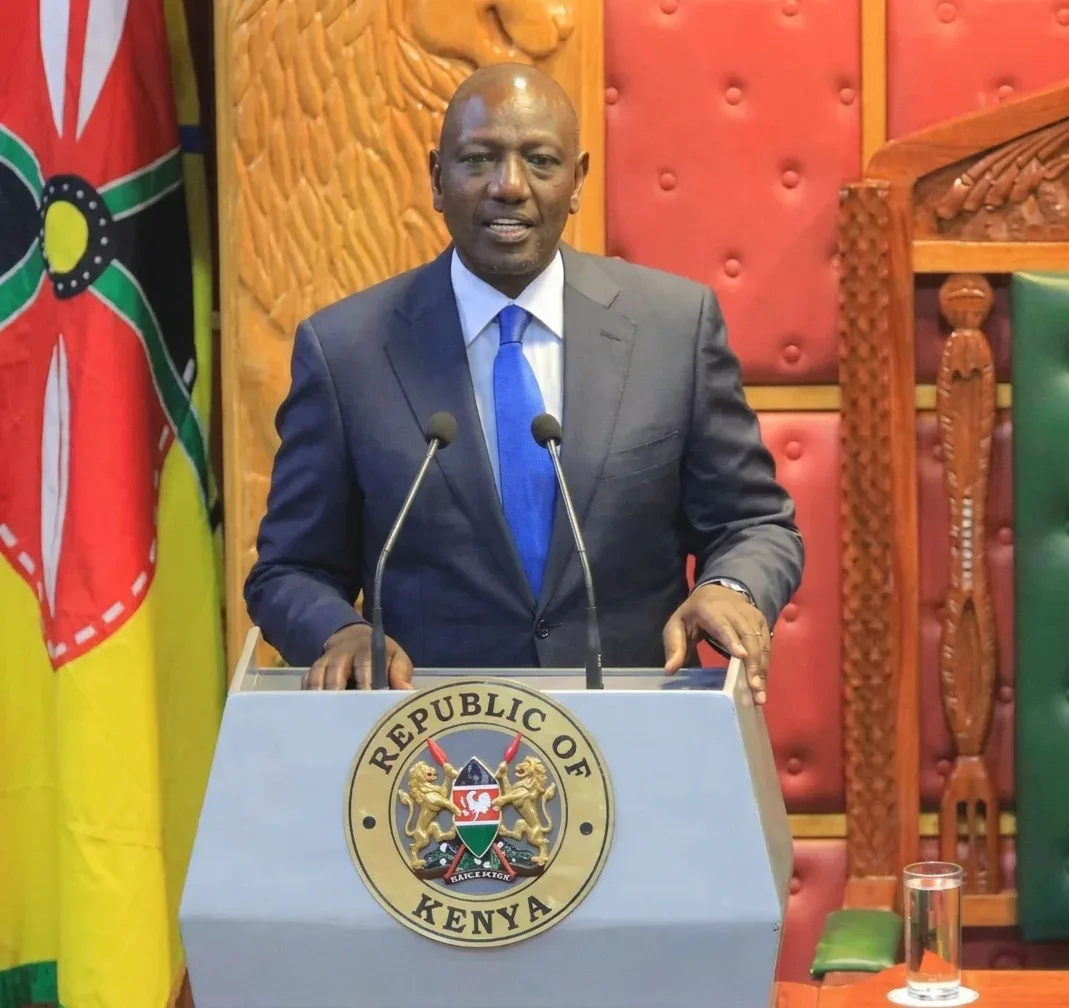
Four years after selling Kenyans a bottom-up revolution, President William Ruto is asking the country to see transformation where many citizens still experience economic pressure, institutional distrust and unfulfilled promises.
There was something revealing about President William Ruto’s fourth State of the Nation Address on Wednesday. With an uncomfortable body language and poise in parts, Ruto appeared to be doing more than reporting on the state of the nation. He was making a case for his presidency, defending a political project whose original selling points – economic empowerment, lower living costs, integrity and opportunity for ordinary Kenyans – have become the very maelstrom around his neck.
This was his final scheduled State of the Nation Address before the August 10, 2027 General Election. It was also his last major constitutional opportunity to present a comprehensive account of what he has done with the mandate Kenyans gave him in 2022.
His opening declaration was emphatic: “Our nation is making a powerful comeback.” He spoke of a recovering economy, expanding infrastructure, revitalised education, improved healthcare and opportunities for young people.
But there is a problem with this narrative: Kenyans have heard variations of it before. Reading Ruto’s previous State of the Nation addresses alongside Wednesday’s speech reveals a presidency that has repeatedly announced foundations, reforms and turning points, while many of the original problems remain stubbornly present.
Four speeches, one recurring promise
In November 2023, Ruto declared that the country was “Prepared and Ready to Go”. He presented his Bottom-Up Economic Transformation Agenda (BETA) as the solution to unemployment, inequality, poverty and the cost of living. Agricultural subsidies, affordable housing, the Hustler Fund and universal healthcare were presented as the building blocks of a transformed economy.
He even offered a seemingly tangible measure of success: A two-kilogram packet of maize flour, he claimed, had fallen to between Ksh145 and Ksh175 from Ksh250. Africa Check subsequently rated this claim misleading after its supermarket checks found significantly higher prices for several brands. It also found that his claims on healthcare-worker recruitment and university debt were inaccurate or understated.
By November 2024, the language had changed. Ruto acknowledged that Kenyans were asking “when real money will get into their pockets, and when the promised jobs they deserve will become a reality.” He admitted that “for many Kenyans, times are hard” and that much remained to be done.
This was a remarkable admission from a President who, a year earlier, had described the country as ready to go. More importantly, the 2024 address came after the Gen Z uprising, which had exposed the depth of public frustration with taxation, economic hardship and the political establishment.
Ruto promised to listen. He acknowledged that peaceful protests were constitutionally legitimate and that government must answer citizens’ questions. Yet the fundamental questions raised by that generation have remained unresolved.
In November 2025, the President shifted the emphasis towards four national priorities and an ambitious infrastructure programme. He announced the National Infrastructure Fund and Sovereign Wealth Fund as innovative ways of financing development without resorting to unsustainable borrowing or imposing additional taxes.
His words were unequivocal: “We cannot continue funding essential infrastructure through unsustainable borrowing or burdening taxpayers with additional taxes.” His words, not ours.
Now, in November 2026, the language has evolved again. We have Usawa, a First World ambition and a nation supposedly making a powerful comeback. But the household questions raised in 2024 remain relevant, as do the fiscal and governance concerns that have accompanied the administration since its inception.
The vocabulary changes. The promises acquire new packaging. The unfinished business remains.
The bottom-up promise meets the household economy
The original economic proposition was straightforward: Reduce the cost of living and increase household incomes. Four years later, the record is disappointing.
There are genuine macroeconomic gains. The shilling has stabilised, foreign exchange reserves have strengthened and economic growth improved to 5.2 per cent in the first half of 2026. The World Bank, however, expects full-year growth of 4.6 per cent.
The more uncomfortable statistic is that 83.8 per cent of Kenyan jobs remain informal. Employment is expanding, but the quality, security and earnings associated with those jobs remain a challenge.
The manifesto’s promise of 250,000 affordable homes annually also requires more than announcements of construction across all 47 counties. How many homes have actually been completed, occupied and made affordable to the intended beneficiaries? The Housing Levy has collected contributions from workers, but the public deserves a transparent account of the relationship between those deductions and completed homes.
The Hustler Fund might have expanded access to credit, with the President reporting cumulative borrowing of Ksh94 billion. But access to loans is not the same as sustainable enterprise. A struggling trader needs purchasing power, affordable inputs, reliable markets and customers, not merely another borrowing facility.
Ruto acknowledged in Wednesday’s speech: “Our task is far from complete.” Indeed. He announced proposed PAYE exemptions for workers earning Ksh32,333 or less monthly, among other tax relief measures. These are welcome proposals, but they raise an uncomfortable question: Why is meaningful relief still being introduced as a fresh presidential intervention four years after a campaign built around putting money in people’s pockets?
There is also the fiscal arithmetic. Kenya’s public debt reached approximately KSh13.1 trillion by June 2026, while interest payments consumed KSh1.074 trillion in the 2025/26 financial year. The budget deficit reached 6.8 per cent of GDP against a target of 4.7 per cent, according to the World Bank.
The 2025 promise of financing transformation without additional taxpayer burdens must therefore be examined against the country’s continuing fiscal pressures. The President’s announcement of payments towards verified pending bills, including Ksh27.8 billion owed to suppliers, including starved media houses, is welcome. But why has government allowed businesses, universities and hospitals to accumulate such substantial unpaid claims in the first place?
Economic stability is an achievement. But it is not the same as economic freedom, particularly for households that continue to struggle.
The cardinal sins that speeches cannot wish away
There is another measure of presidential performance: Governance and the character of power.
This is where Inflection’s coverage of the Ruto presidency’s “Cardinal Sins” becomes particularly relevant. Development cannot be assessed independently of integrity, accountability, respect for constitutional freedoms and the responsible exercise of public power.
In 2023, Ruto promised that the police would be professional, independent and impartial, and that fundamental freedoms would be protected. In 2024, after the Gen Z protests, he acknowledged that peaceful demonstrations were legitimate and condemned excessive or extrajudicial police action.
He went further in Wednesday’s address, declaring: “Kenyans must remain free to express disagreement and criticise their Government.”
He also reported that Ksh1.2 billion had been paid to 1,476 verified beneficiaries of protest-related violations, including civilians and police officers. This acknowledgement and compensation deserve recognition. But compensation cannot substitute for justice. The President himself conceded that “investigations must continue, and prosecutions must follow”.
That is precisely the unfinished business.
Human Rights Watch’s World Report 2026 documented continuing abuses against protesters and government critics, including abductions and enforced disappearances, alongside inadequate accountability for security-force violations. Amnesty International and other human rights organisations have also documented the consequences of the 2024 crackdown.
The administration cannot simultaneously celebrate constitutional freedoms and leave citizens uncertain about whether exercising those freedoms might cost them their lives or liberty.
On corruption, Ruto declared: “Corruption increases the cost of doing business, discourages investment and denies honest citizens a fair opportunity to succeed.”
Again, an admirable statement. But digitising government services through eCitizen does not, by itself, establish that corruption has been defeated. Neither does passing legislation guarantee accountability in practice. The World Bank’s November 2026 economic update estimates that corruption and collusion affecting public expenditure and revenue collection could account for up to two percentage points of GDP in annual fiscal deficits. It also found that 39 per cent of firms identify corruption as a major constraint.
The question is not whether Kenya has introduced reforms. It is whether those reforms are changing the conduct of people entrusted with public resources.
Usawa: a new vocabulary for an old promise
Wednesday’s most prominent political message was Usawa ni Sawa. Ruto presented equality and equitable development as the organising principle of his next phase of leadership.
His reference to the Northern Kenya Gateway Corridor and the historical neglect of communities without adequate infrastructure was important. A child in Turkana deserves the same opportunities as one in Eldoret. That is an entirely defensible national aspiration.
But Usawa must mean more than geographical distribution of development projects. It must also mean equal treatment before the law, fair taxation, equitable access to services and protection of constitutional freedoms, irrespective of political affiliation.
There is a risk that Usawa becomes another attractive political slogan, much as Bottom-Up did, unless the administration establishes measurable outcomes against which citizens can hold it accountable.
The irony is that Ruto himself provided the standard for assessing his presidency. He urged Kenyans: “Let us test proposals against evidence, commitments against resources and promises against results.”
Precisely.
How many promised affordable houses are completed and occupied? How many sustainable jobs have been created? How much have household costs fallen relative to incomes? What has changed in the quality of public healthcare? How many victims of unlawful police conduct have received justice, beyond contested compensation?
These are not opposition questions. They are the questions of citizens exercising the accountability the President says they deserve.
Ruto has achievements worth defending. Economic stability has improved, infrastructure projects are advancing, and programmes in agriculture, housing and financial inclusion have created opportunities. But achievements do not cancel unfinished obligations, and ambitious targets cannot substitute for independently verifiable results.
In August 2027, Kenyans will not be voting on the eloquence of Usawa, the promise of Bottom-Up or the grandeur of a First World ambition. They will be voting on their experience of four years of Ruto’s presidency.
The generation that refused to forget
Perhaps the greatest political miscalculation would be to underestimate the generation that forced this administration to confront the limits of its own narrative.
The Gen Z protests were not simply a rejection of the Finance Bill 2024. They were a rejection of a political culture that expected unquestioning loyalty while demanding ever more sacrifices from citizens. They questioned public expenditure, challenged corruption, demanded accountability and insisted that government belongs to the people.
They did something profoundly patriotic: They refused to surrender their country’s future to political convenience.
Their demands were not unreasonable. They wanted a government that listens, protects life, respects the Constitution and treats public money as a public trust. They wanted opportunity without patronage and leadership without impunity.
Yet the response to their demands included deaths, injuries, abductions, arrests and intimidation. The subsequent reshuffling of political alliances and the incorporation of former opponents into government may have altered the political landscape, but they did not extinguish the questions Gen Z raised.
This is the generation Ruto must answer to, not merely appeal to through youth employment statistics and digital-economy programmes.
The President’s final scheduled State of the Nation Address is over. But accountability does not end when the parliamentary sitting closes, nor does the people’s right to demand answers expire with a presidential speech.
Inflection continues its coverage of the Ruto presidency’s Cardinal Sins. Today, we turn the spotlight on perhaps the most consequential betrayal of his presidency: The betrayal of the most nationalistic and patriotic generation yet – Gen Z.
A generation that asked for a better country and was met, in far too many instances, with bullets, abductions and broken promises.
Their patriotism should not be measured by their willingness to applaud those in power, but by their courage to insist that power serves the people. Their demands remain unfinished business. And their generation must not be written off, bought off or frightened into silence.
Ruto’s speeches may have run their course. Kenya’s struggle for accountable leadership has not. The task now is to turn public frustration into sustained civic action, constitutional accountability and a better political future.
The country belongs to its citizens, not its leaders. And the future belongs to a generation brave enough to insist on that truth.